
All Brands
Tampa Oven Repair for Gas and Electric Models
Ovens tend to fail one part at a time: an igniter loses strength, a sensor drifts, a door hinge weakens. Tampa ProFix identifies the worn part, explains the repair and its price, and fixes it with your go-ahead.
Open 24 hours, 7 days a week
Schedule Your Repair
Service Type
What type of service do you need?
Or call us directly:
(813) 412-5186Oven Brands We Repair































Houses, Apartments & Condos Across the Tampa Bay Area
Using electric elements or a gas burner, an oven produces steady heat in a well-insulated box and relies on a sensor and a control to hold the temperature you set. If it will not heat or drifts away from the setting, weeknight dinners and anything that needs a dependable bake go on hold. Tampa ProFix repairs single and double wall ovens and the ovens in freestanding, slide-in and professional-style ranges, in both gas and electric. That includes fan-assisted and true convection models and both self-cleaning and steam-cleaning systems, plus doors, hinges, latches, igniters, elements, temperature sensors and control boards on all major brands.
How It Works
Tampa Bay Area
Ready to schedule your repair?
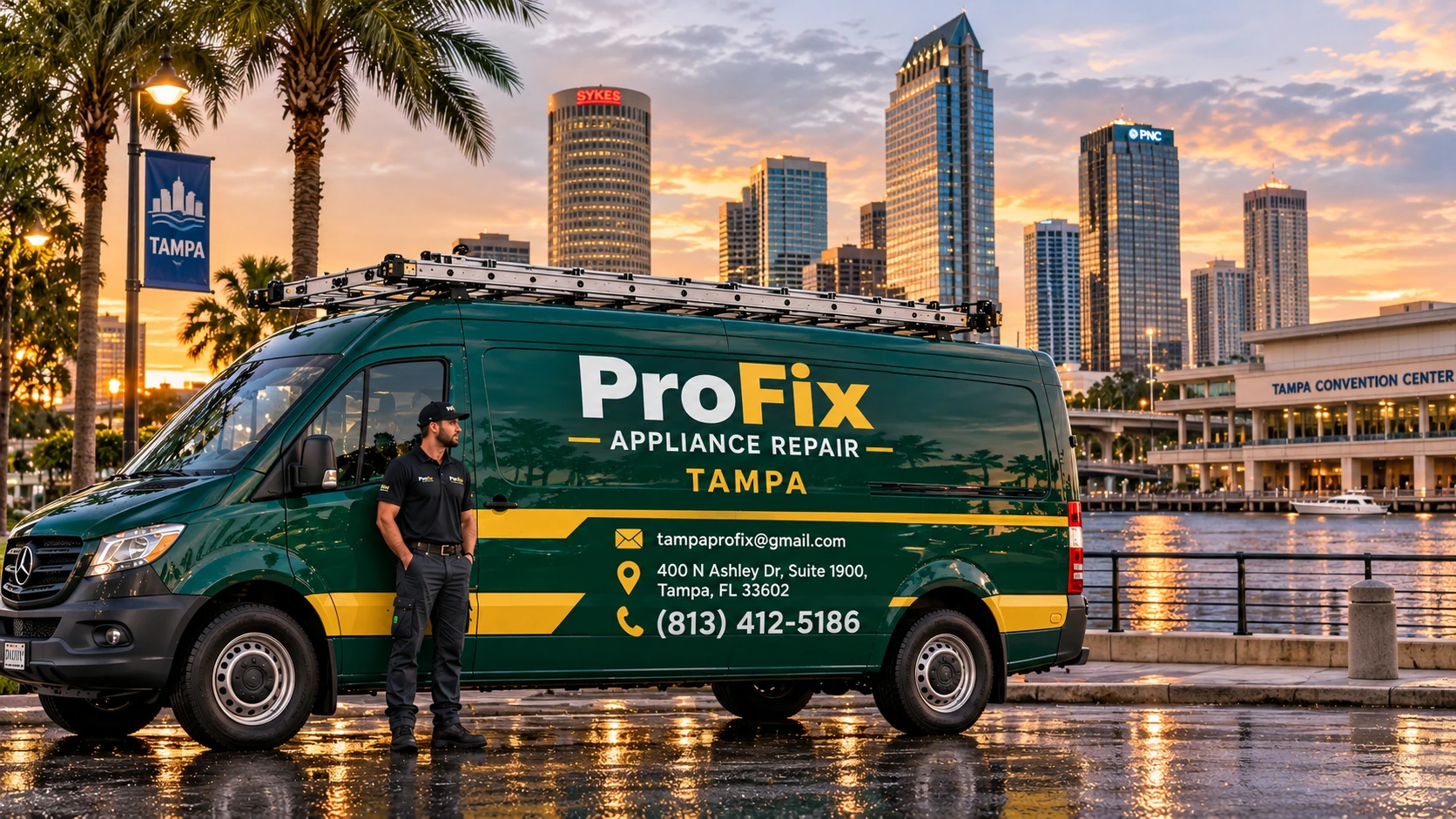
Tampa ProFix Repair: in-home appliance repair across the Tampa Bay area, with the price agreed before any work.
Danger Signs That Mean Stop Now
A few oven problems are not wait-and-see. If you smell gas, get everyone out of the house without flipping lights or appliances on or off, and phone the gas company or 911 once you are outside. If an element is sparking or glowing in one bright spot, or the oven keeps heating after it has been switched off, turn it off at the control and at the breaker, and leave the breaker off until a technician has looked at it.
Treat a burning electrical smell or a scorched control panel the same way. Never hold a match to a gas oven burner that will not light, and if a breaker trips a second time, leave it off rather than resetting it again.
How the Oven Holds a Temperature
Every oven is basically an insulated cavity, a heat source, a temperature probe and a control that switches the heat on and off to stay near your setting. On electric models the lower bake element does most of the work, the upper broil element browns, and many controls fire both together to speed preheating. Gas models depend on a hot-surface igniter. The igniter has to reach full heat and pull enough amperage for the safety valve to let gas through to the burner.
The common failures are electrical. Elements burn through, igniters lose strength over months, probes wander off their readings, and the board's relays pit from switching heavy loads. Mechanical wear shows up in door hinges and springs, the door gasket, and the motor-driven latch for self-clean. Any convection oven brings a fan motor into the mix, and a true or European convection model also has its own element circling that fan.
Cold, Slow, Hot or Locked: Common Complaints
No heat while the display still works most often traces to whatever makes the heat or the wiring and relay that feed it: an element that has opened, an igniter too weak to open the valve, a blown thermal fuse, or a relay that no longer closes. A long preheat is often the first stage of the same fault, especially with a tired igniter or a broil element that stopped contributing.
Burning food or uneven results come from a drifting sensor or calibration far more often than from a bad element, and an offset adjustment in the settings usually corrects it. A latch that will not release after self-clean, nonstop beeping, or an F-series code leads the technician to the lock motor, the touchpad or the control board.
Gas ranges have one more wrinkle. When the oven lights slowly while the cooktop burners fire right away, the supply is fine, and the oven's own igniter and safety valve become the focus.
Owner Checks Worth Doing
Head to the panel first. Electric ovens use a two-pole breaker, and half of it can trip while the clock stays lit, so the oven looks alive but cannot make heat. Give the breaker one reset; a second trip means it stays off. On a gas range, confirm the cooktop burners light, which tells you gas is reaching the appliance.
For temperature complaints, a cheap oven thermometer on the middle rack beats any test bake. Log readings for about twenty minutes after preheat; every oven cycles a bit hotter and cooler than the dial. With the oven off and cool, look for blisters or breaks on the elements and for crushed or missing stretches of door gasket.
Storm Season and All-Electric Kitchens Around Tampa
Many Tampa Bay homes are all-electric, so electric ranges and wall ovens are everywhere, with gas models where natural gas service has been run. Afternoon thunderstorms through the wet season bring lightning and brief outages, and hurricane season can bring long ones. Electronic controls sometimes wake up confused after a power interruption. A dark display, a clock you cannot set, or a touchpad that ignores you after a storm may clear after the breaker is off for a minute, or may mean the board absorbed a spike.
Surge protection lowers the odds but will not stop every spike. If floodwater reached the oven, do not switch it on. Wet controls, wiring and gas valves are a safety risk, and many flood-soaked units should be replaced rather than repaired. In bayfront homes, salt air can also corrode exposed terminals over the years.
Booking, Deciding and Making It Last
Book online or by phone. The technician confirms the complaint, runs any built-in diagnostics, and measures igniter amperage, probe resistance and relay output with a meter rather than trusting the code alone. You get the cause and the price before work begins. Elements, igniters and probes are often on the van; boards and model-specific hinges may need ordering and a second trip.
Elements, igniters, probes, hinges and gaskets are worth replacing on ovens of nearly any age, because the cavity and insulation rarely wear out. Boards on older or discontinued models are the harder call. Wall ovens lean toward repair, since a new one must fit the existing cutout.
Self-clean is the most punishing cycle an oven runs, and it often precedes blown fuses, stuck latches and failed boards. Wipe spills once they cool, slide a sheet pan under anything likely to bubble over, keep foil off the cavity floor, and do not lean on or load up the open door.
Still have questions?
Call us or book online for an in-home visit anywhere in our Tampa Bay service area.
Common Oven Problems We Fix
Oven Repair by Area
What oven owners run into in each part of the Tampa Bay area, from housing and water to building access.